Circular Jewelry & Youth Leadership Program
From plastic recovery to creative learning and youth leadership, this Laya Loop feature turns environmental action into student creativity, entrepreneurship, and supervised peer mentorship.
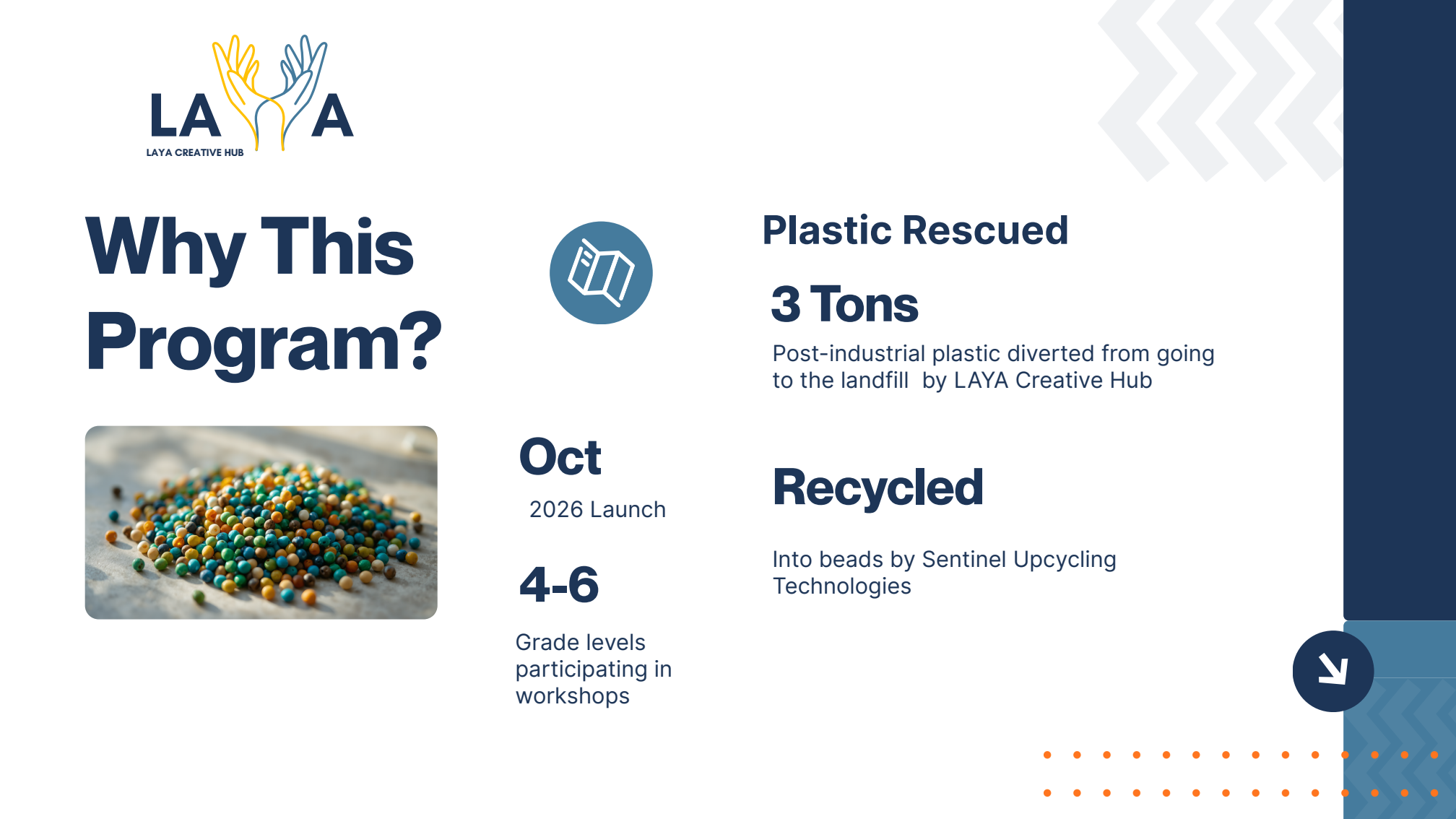
Launch target
Oct 2026
The PDF positions this as a proposed school-based launch in Cardona.
Potential reach
600 learners
Grade 4 to Grade 6 learners across 15 sections in partner schools.
Youth mentor track
50 mentors
Grade 6 learners can join a focused jewelry and leadership mentor pathway.
Plastic goal
12 metric tons
A recovery target presented in the PDF as a program goal, not a condition for training.
Program overview
Why this program matters
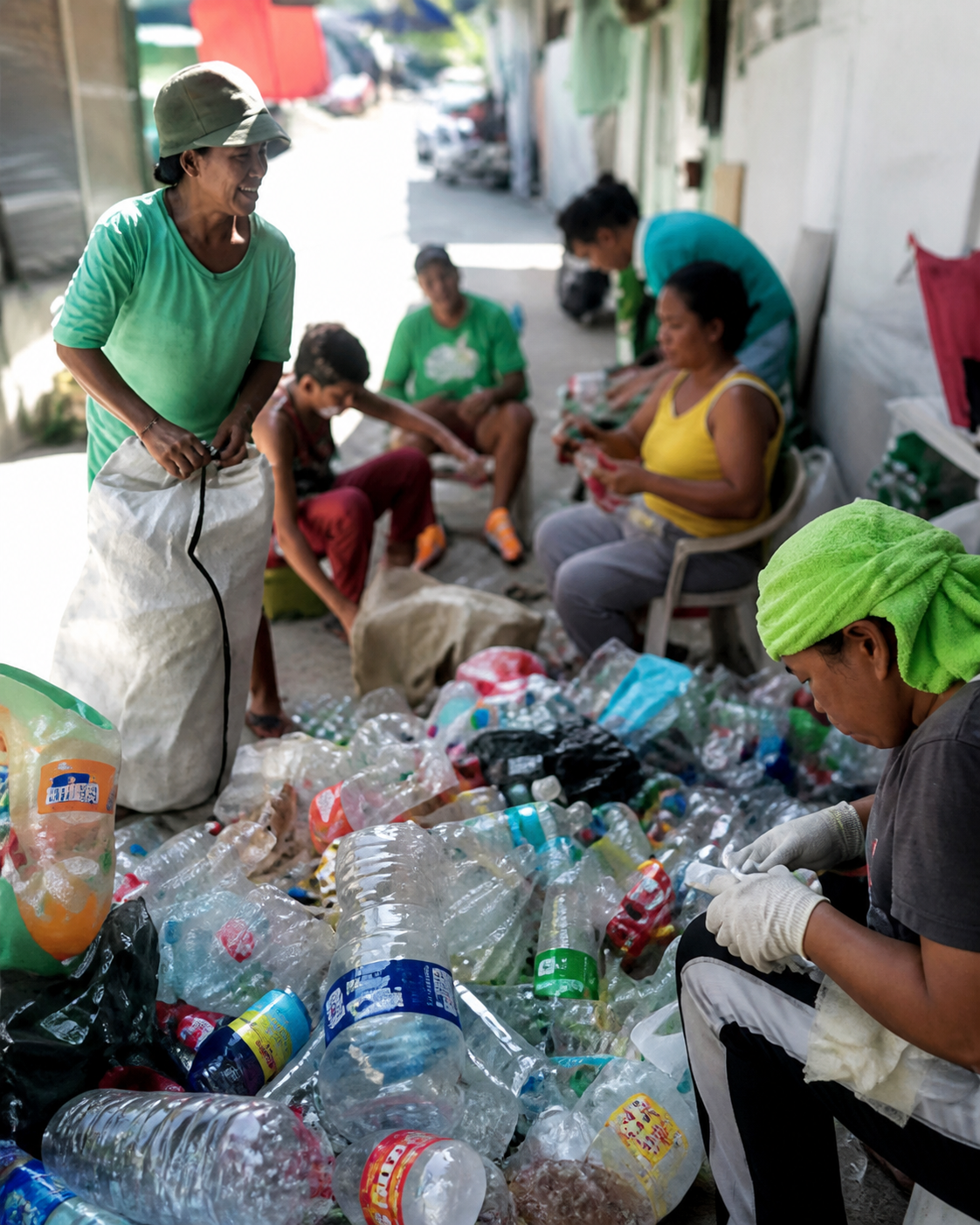
The program connects environmental action with creative learning by transforming recovered PET plastic into recycled beads and student-made accessories.
It builds practical skills in jewelry design, entrepreneurship, leadership, and circular-economy awareness while creating a stronger link between school learning and Cardona’s plastic recovery work.
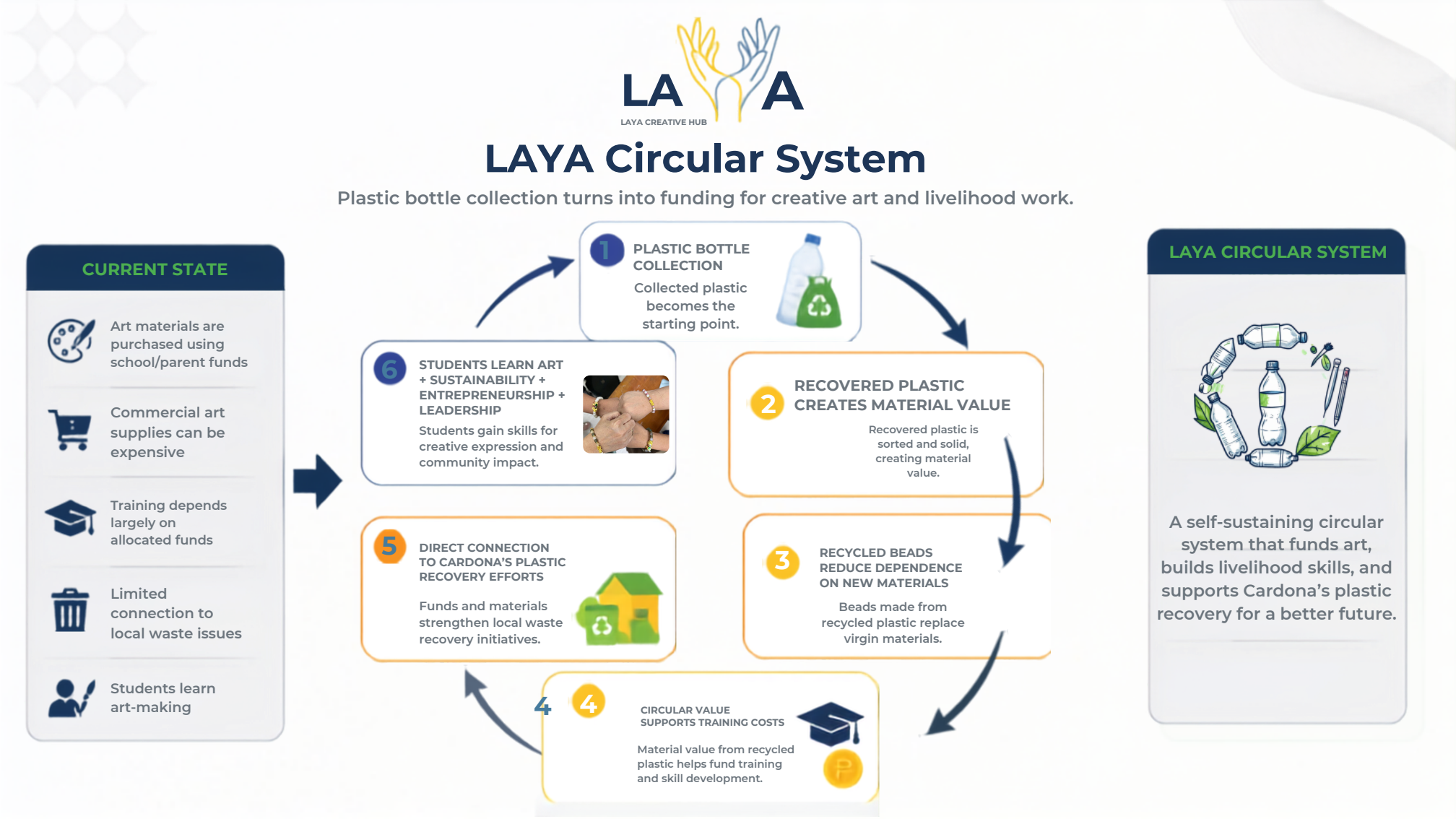
The funding idea is also circular: recovered material value can help sustain training costs and reduce dependence on newly purchased materials.
Circular system
How Laya Loop works
01
Plastic bottle collection
Collected plastic becomes the starting point for recovery, material value, and training support.
02
Recovered plastic creates value
Recovered materials are sorted and processed so they can support creative production and lower material dependence.
03
Recycled beads replace virgin materials
Student projects use recycled bead materials instead of relying only on newly purchased art supplies.
04
Students learn and lead
Learners gain art, sustainability, entrepreneurship, and leadership skills through supervised workshops and peer learning.
Student pathway
Learning, mentorship, and creative output
The PDF describes both whole-class learning and a focused youth mentor track so learners can grow from creative practice into peer support and leadership.
Creative learning
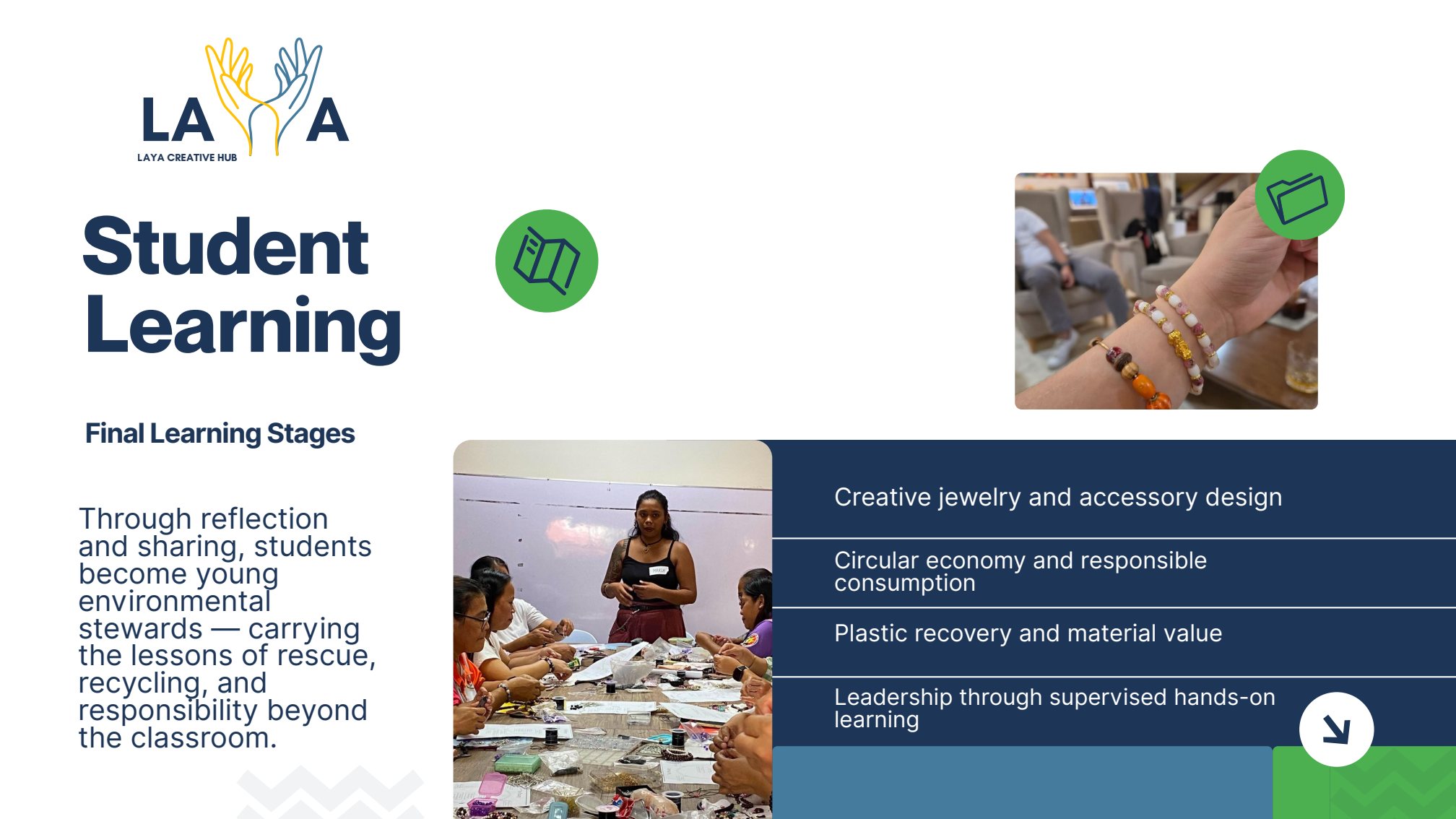
- Creative jewelry and accessory design
- Circular economy and responsible consumption
- Plastic recovery and material value
- Reflection, sharing, and environmental stewardship
Youth mentor track
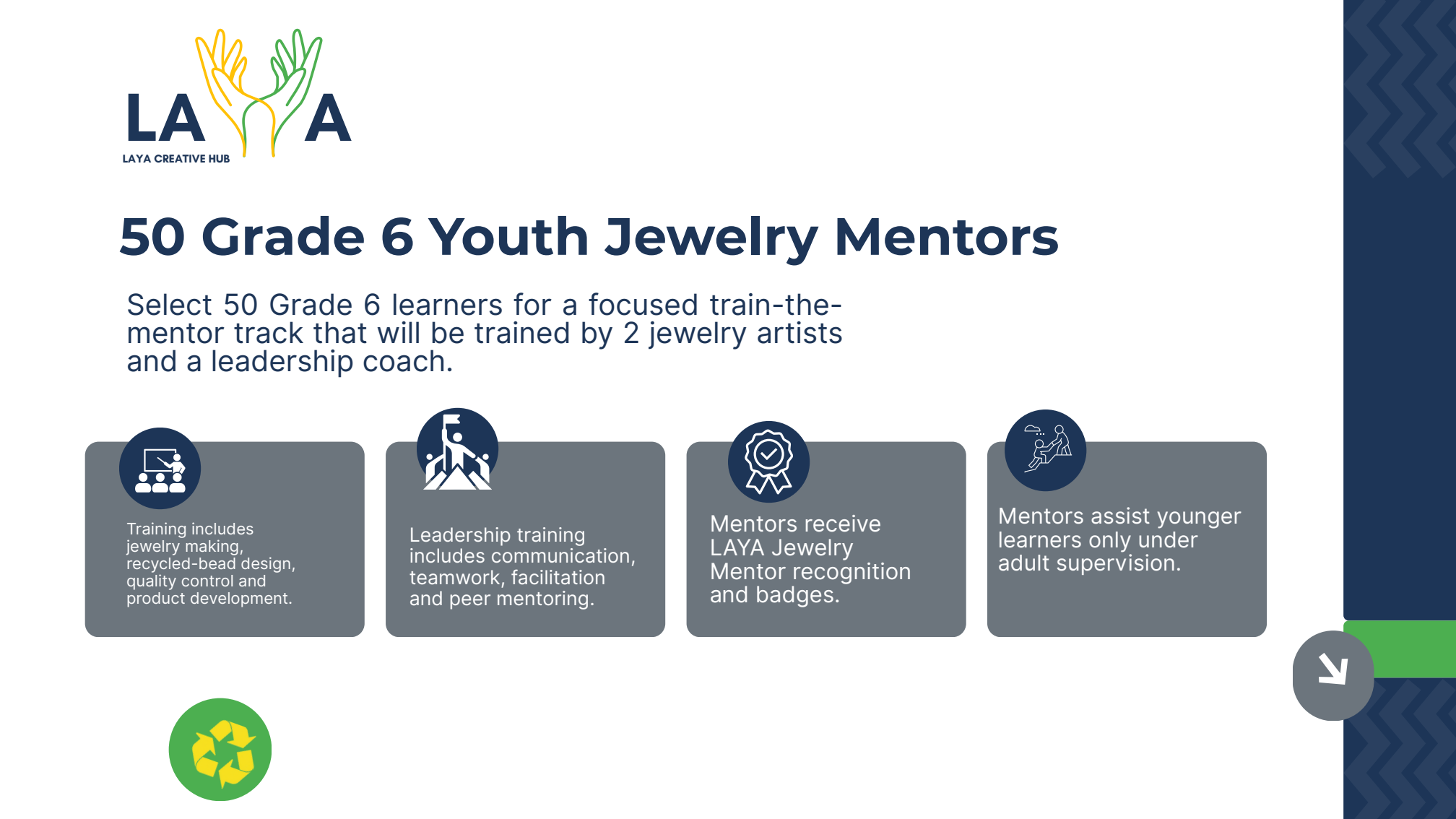
- 50 Grade 6 learners for a train-the-mentor pathway
- Jewelry making and recycled-bead product development
- Quality control and communication skills
- Peer mentoring under adult supervision
Expected outputs
- Student-made recycled-bead rosaries
- Jewelry prototypes and school showcases
- Peer-learning sessions completed
- Documented environmental, leadership, and financial results
Implementation roadmap
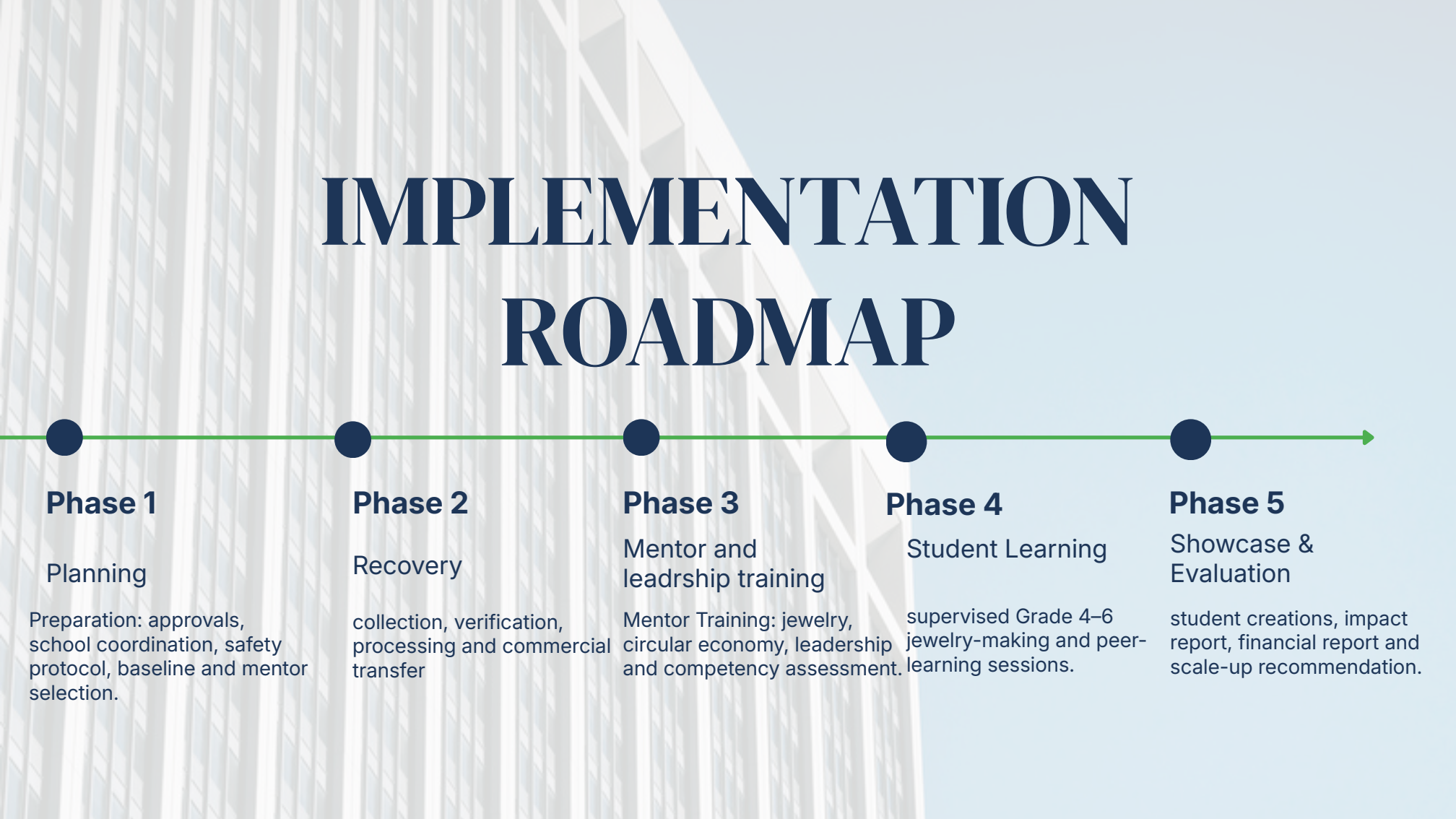
Five phases from planning to evaluation
Phase 1: Preparation
Approvals, school coordination, safety protocol, baseline work, and mentor selection.
Phase 2: Mentor training
Jewelry making, circular economy learning, leadership development, and competency assessment.
Phase 3: Recovery and processing
Collection, verification, processing, and commercial transfer of recovered plastic materials.
Phase 4 and 5: Student learning, showcase, and evaluation
Supervised Grade 4 to 6 sessions, student creations, impact reporting, financial reporting, and scale-up recommendations.
Safety and partnership
Safeguarding, shared roles, and community implementation
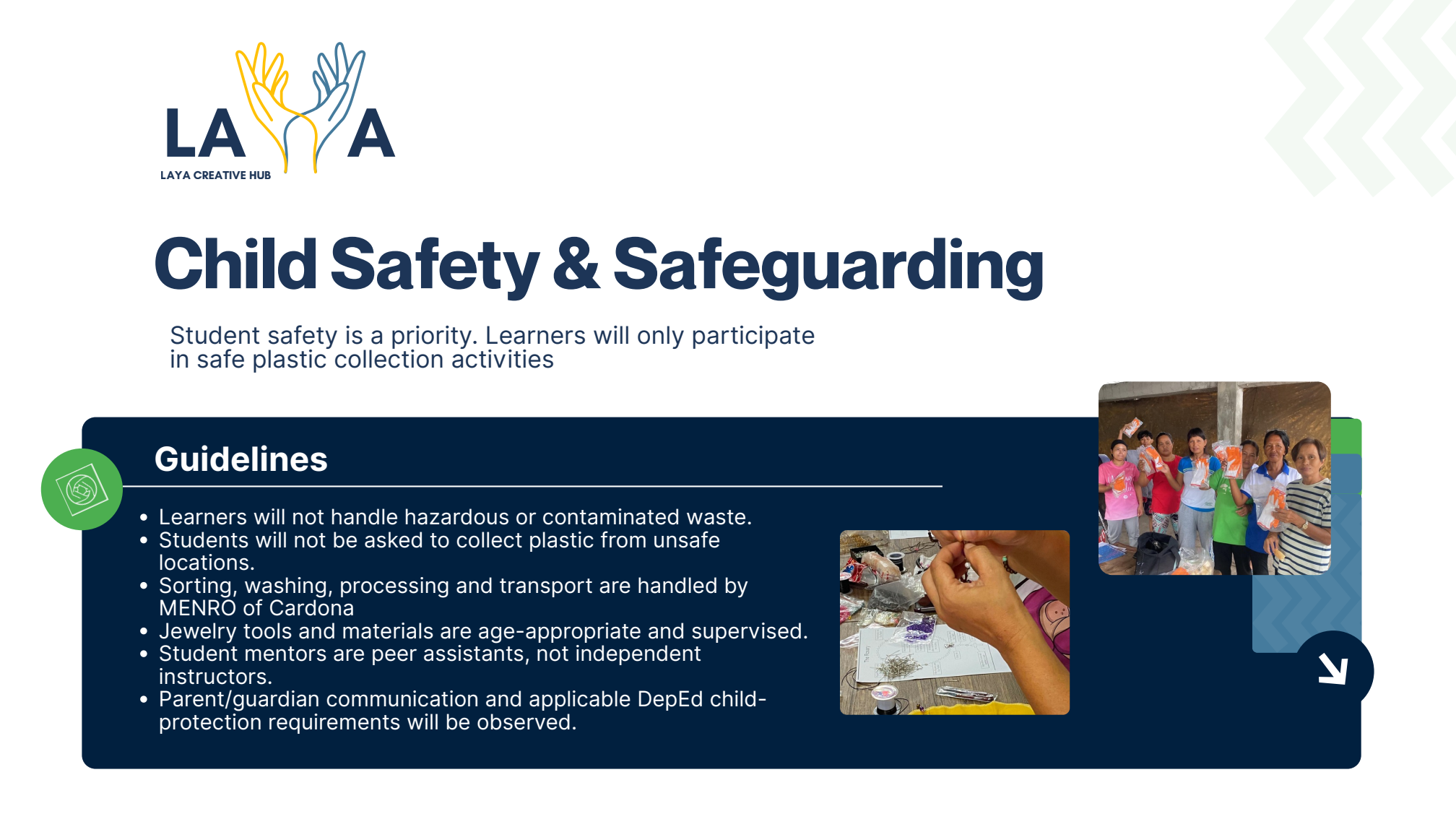
Learners are not expected to handle hazardous or contaminated waste. Sorting, washing, processing, and transport are handled through supervised and age-appropriate systems.
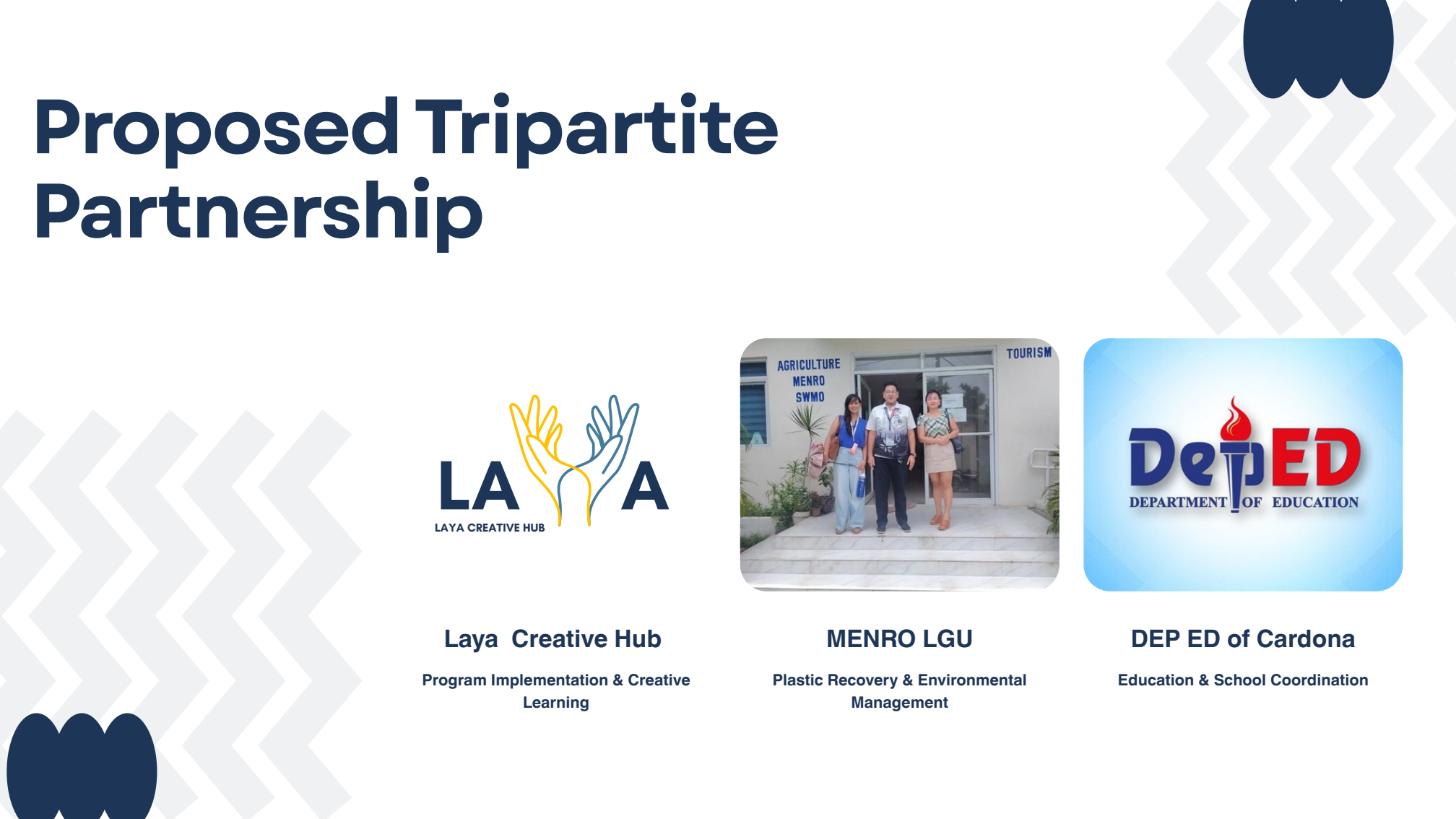
The PDF also outlines a tripartite partnership among Laya Creative Hub, MENRO or LGU partners, and DepEd Cardona to connect program implementation, environmental management, and school coordination.
Clear roles help reduce confusion, support accountability, and keep the circular program practical for schools and communities.
Presented by Laya Creative Hub
Together, let waste create a second chance.
This feature page is based on the Circular Jewelry & Youth Leadership Program PDF and now sits inside the Laya Loop workshop carousel as a dedicated click-through topic.